Hey there, fellow tech enthusiasts! As someone who’s spent over a decade deep-diving into the world of phone and electronic device charging, and as the official content creator for SYFCA.com, I can tell you that a “Charger In Wall” – or as we commonly call it, a wall charger – is far more than just a simple plug. It’s the lifeline for your indispensable gadgets, and understanding it can make all the difference in charging speed, device longevity, and most importantly, safety.
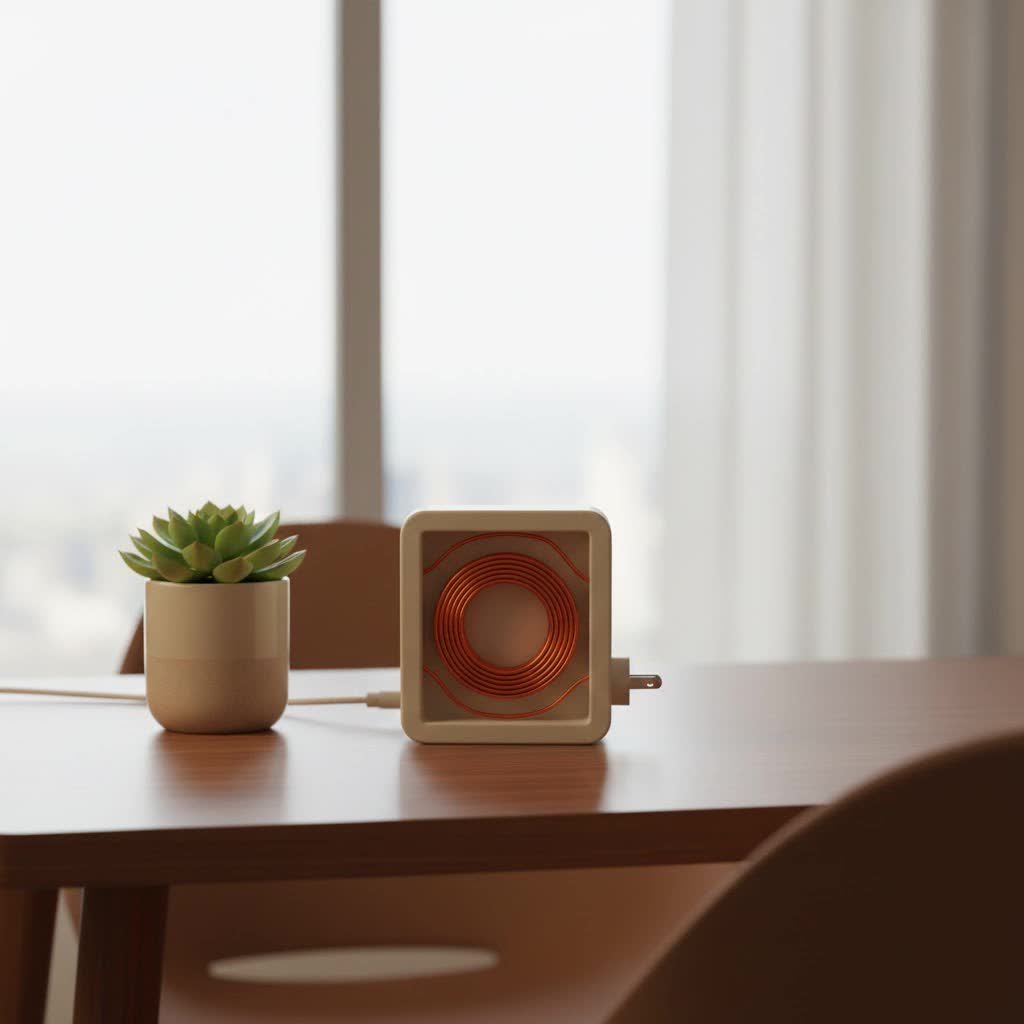
At SYFCA, we believe that informed choices lead to better experiences. That’s why I’m here to demystify everything about wall chargers, from the latest GaN technology to essential safety standards. Let’s get your devices powered up the right way!
What Exactly is a Wall Charger and Why Does it Matter?
At its core, a wall charger is an electrical device that plugs into a standard wall outlet, converting the alternating current (AC) from your home’s electrical system into the direct current (DC) that your smartphone, tablet, laptop, and other electronics need to charge their internal batteries. Think of it as a small, intelligent translator for electricity.
Why is a good wall charger so crucial? Well, it’s not just about getting power into your device. A high-quality charger ensures consistent and stable power delivery, protects your valuable electronics from electrical surges and damage, and can significantly reduce the time you spend tethered to an outlet. Choosing the right one means safer, faster, and more efficient charging, ultimately extending the life of your device’s battery.
Decoding Wall Charger Types: From USB-A to GaN Powerhouses
The world of wall chargers has evolved dramatically. What used to be a generic block is now a sophisticated piece of technology. Let’s break down the main types you’ll encounter.
The Tried-and-True: USB-A Wall Chargers
|
Our Picks for the Best Wall Charger in 2026
As an Amazon Associate I earn from qualifying purchases.
|
||
| Num | Product | Action |
|---|---|---|
| 1 | USB Wall Charger, LUOATIP 3-Pack 2.1A 5V Dual Port Cube Power Adapter Plug Block Charging Box Brick for iPhone 14 13 12 11 Pro Max SE XS XR X 8 7 6 6S Plus, Galaxy, LG, Moto, Android Phones |

|
| 2 | 128W USB C Wall Charger,GaN III 3-Port Fast Charging Station,PD QC Foldable Charger Block Portable 65W Laptop Adapter for MacBook Pro/Air,iPad Pro,Galaxy S23,Dell XPS 13,iPhone 17/16/Pro etc |
|
| 3 | 2 Pack USB C Charger Block, Dual Port Type C Wall Charger Fast Charging 20W Power Adapter Cube for iPhone 14/14 Pro/14 Pro Max/14 Plus/13/12/11, XS/XR/X, iPad, Samsung, More |
|
| 4 | JcBlaon Outlet Extender Surge Protector - 6 Outlet Splitter with 4 USB Ports (2 USB C), Multiple Plug Expander Wall Charger, 3 Sided Multi Plug Wall Adapter Power Strip for Home Office Kitchen Travel |
|
| 5 | USB C Wall Charger Block, 2Pack 60W 5-Port C Charger Fast Charging Block PD Power Adapter +QC 3.0 Multiport Type C Box Brick Cube USB A Wall Plug for iPhone 15/16/17 Pro Max Plus, iPad,Samsung Galaxy |
|
| 6 | Surge Protector Outlet Extender - with Rotating Plug, 6 AC Multi Plug Outlet with 4 USB Ports (2 USB C), 1800J Wall Charger, 3-Sided Power Strip with Spaced Outlet Splitter for Home, Office, Travel |
|
| 7 | Anker Nano 47W USB C Charger, 2 Port Compact Foldable GaN Charger for iPhone 17 / 16, Galaxy, Pixel, Compatible with MagSafe (White) |
|
| 8 | iPhone Fast Charger 3+3Pack 20W USB C Wall Charger with 6FT Fast Charging Cable Compatible with iPhone 14/13/12/11/Pro/Pro Max |
|
| 9 | 2Pack USB C Fast Charger Block, 60W 5-Port USB C Wall Charger 30W Type C Charging Block, 2USB C+3USB A PPS/PD 3.0 Multiport Charging Cube for iPhone 17 16 15 14 Pro Max,for Galaxy S25 S24 Ultra, i Pad |
|
| 10 | LCGENS USB C Wall Charger Block 20W, 2-Pack Dual Port PD Power Delivery Fast Type C Charging Block Plug Compatible with iPhone 11/12/13/14/15/16/17 Pro Max, XS/XR/X, Ipad Pro, Samsung Galaxy |
|
For years, the rectangular USB-A port was the universal standard for wall chargers. These chargers typically offer lower power outputs, often around 5W to 12W, making them suitable for overnight charging or less demanding devices. While they’re still widely compatible with older devices and accessories, their charging speeds are generally slower compared to newer technologies. You might still find these useful for legacy gadgets, but the market is moving on.
The Modern Standard: USB-C Wall Chargers
Enter USB-C, the reversible, oval-shaped connector that has become the dominant port for modern devices. USB-C wall chargers are designed to handle much higher power outputs, supporting fast charging protocols like USB Power Delivery (PD). This means quicker charge times for everything from your smartphone to your laptop. The beauty of USB-C is its versatility; one charger can often power a wide array of devices, simplifying your charging setup. With Power Delivery, your charger and device communicate to deliver the optimal power level, ensuring efficient and safe charging without overdoing it. Some advanced USB-C chargers also incorporate PPS (Programmable Power Supply), which fine-tunes voltage and current in real-time for even faster and more adaptive charging, especially for devices like Samsung Galaxy phones.
The Game-Changer: GaN Technology in Wall Chargers
If you’ve noticed smaller, more powerful chargers hitting the market, you’re likely looking at GaN technology. GaN stands for Gallium Nitride, a semiconductor material that replaces traditional silicon in charger components. What’s the big deal? GaN allows chargers to be significantly smaller and lighter while simultaneously delivering higher power outputs with greater efficiency. This means less heat generation and more power packed into a pocket-friendly size. For travelers, minimalists, or anyone who wants a powerful yet compact charger, GaN wall chargers are a revelation. They’re truly changing how we think about the size and capability of our charging bricks.
Understanding Charging Power: Watts, Amps, and Volts Explained
When you look at a charger, you’ll often see numbers like 5V/2A or 65W. What do these mean for your “charger in wall” experience?
What is Wattage and Why is it Important for Your Devices?
Wattage (W) is the measure of electrical power a charger can deliver. It’s calculated by multiplying Voltage (V) by Amperage (A). So, a charger rated 9V/2A delivers 18W. In simple terms, higher wattage means potentially faster charging. However, your device will only draw as much power as it’s designed to handle. For instance, an iPhone might optimally charge at 20W, while a laptop could require 65W or even 100W. Using a 100W “charger in wall” on a 20W phone is perfectly safe; the phone will simply draw its maximum 20W and no more. The key is to match your charger’s wattage to, or exceed, your device’s maximum charging intake for the best speed.
Fast Charging Protocols: Beyond Just More Watts
“Fast charging” isn’t just about raw wattage; it’s also about the communication protocols between your charger and device.
- USB Power Delivery (PD): This is the leading standard for USB-C fast charging. It allows for flexible power output, enabling chargers to deliver up to 100W (and even more with new standards like PD 3.1) to compatible devices. Most modern smartphones, tablets, and laptops leverage PD for rapid power-ups.
- Quick Charge (QC): Developed by Qualcomm, QC is widely used in Android devices. It allows for significantly faster charging than standard USB-A chargers. While USB-C PD is becoming more universal, many Android phones still benefit from QC compatibility.
- Adaptive Fast Charging: Various manufacturers have their own branded fast-charging technologies, such as Samsung’s Super Fast Charging or Apple’s optimized charging. These often work within the frameworks of PD or QC but might have specific optimizations.
To truly fast charge, you need three compatible components: a device that supports fast charging, a “charger in wall” with the correct protocol and wattage, and a cable that can handle the power transfer. Don’t overlook the cable! A cheap, non-compliant cable can severely limit your charging speed, even with the best charger.
Safety First: Essential Wall Charger Certifications and Features
When it comes to charging, safety should never be an afterthought. A malfunctioning “charger in wall” can pose serious risks, from overheating to electrical fires. This is where certifications and built-in protections become non-negotiable.
Recognized Safety Certifications: UL, CE, and FCC
Always look for wall chargers that carry recognized safety certifications. These marks are your assurance that the product has undergone rigorous testing and meets strict safety standards.
- UL Certification (Underwriters Laboratories): Predominantly recognized in North America, UL certification signifies that a charger has been tested for electrical safety, including resistance to electrical shock, fire hazards, and proper insulation. A UL-certified charger indicates a comprehensive evaluation.
- CE Marking (Conformité Européene): Mandatory for products sold within the European Economic Area (EEA), the CE mark indicates that the product complies with EU health, safety, and environmental protection legislation. For chargers, this covers electromagnetic compatibility (EMC) and low-voltage safety.
- FCC Certification (Federal Communications Commission): In the United States, FCC certification ensures that the electronic device (including your charger in wall) does not cause harmful electromagnetic interference to radio communications.
Choosing a charger with these certifications provides peace of mind, knowing it meets industry-accepted safety criteria.
Built-in Protection: Safeguarding Your Devices and Home
Beyond external certifications, a quality wall charger will have internal safety features designed to protect both your device and your home:
- Over-voltage Protection: Prevents too much voltage from reaching your device, which could cause irreparable damage.
- Over-current Protection: Safeguards against excessive current flow, which can lead to overheating.
- Short-circuit Protection: Automatically shuts off power if a short circuit is detected, preventing fires or component damage.
- Overheating Protection (Temperature Control): Monitors the charger’s temperature and reduces power or shuts down if it gets too hot, protecting the charger and connected device.
These features are crucial. As Mr. John Harrison, a veteran electronics safety engineer, often says, “A charger without robust internal safety mechanisms is a ticking time bomb. Always prioritize certified protection over price.”
How to Choose the Right Wall Charger for Your Needs
Navigating the myriad of options for a “charger in wall” can feel overwhelming. Here’s a straightforward guide to making the best choice:
Assess Your Devices’ Power Requirements
First, know your devices. Check their manuals or manufacturer websites to determine the optimal charging wattage they support. For example, your smartphone might charge fastest at 20W, while your laptop needs 65W. If you want one charger for multiple devices, opt for a higher-wattage, multi-port charger that can intelligently distribute power. Remember, a charger won’t force more power than your device can handle.
Consider the Number and Type of Ports You Need
Are you a multi-device user? A “charger in wall” with multiple ports (e.g., one USB-C PD and one USB-A) can be incredibly convenient, reducing the number of adapters you need to carry. For charging a phone and a laptop simultaneously, look for a charger with at least two high-wattage USB-C PD ports. For a truly versatile setup, make sure it offers a mix of USB-A and USB-C.
Portability and Design: On the Go or At Home?
If you travel frequently, a compact GaN charger with foldable prongs can be a lifesaver. Its smaller size and lighter weight make it easy to toss into your bag. For a stationary setup at home or the office, a multi-port desktop-style charger might be more practical, offering numerous ports without hogging multiple wall outlets.
Invest in Reputable Brands and Certifications
This cannot be stressed enough: always purchase wall chargers from reputable brands that explicitly list their safety certifications (UL, CE, FCC). While a cheaper, unbranded charger might save you a few dollars upfront, the potential risks to your devices and personal safety are simply not worth it. SYFCA always advocates for quality and safety, ensuring you get the best performance without compromise.
Maximizing Lifespan: Tips for Using and Maintaining Your Wall Charger
A good “charger in wall” is an investment. Here’s how to keep it performing optimally and safely for years to come:
- Handle with Care: Always grasp the charger by its body when plugging in or unplugging, rather than pulling on the cable. This prevents strain and damage to both the cable and the charger’s internal connections.
- Mind Your Cables: Inspect your charging cables regularly for fraying or damage. A damaged cable can be a fire hazard and reduce charging efficiency. Replace them immediately if you notice any wear and tear.
- Optimal Storage: When not in use, store your charger in a cool, dry place. Avoid extreme temperatures, direct sunlight, or humid environments, which can degrade components over time.
- Avoid Over-stressing Outlets: While multi-port chargers are convenient, avoid plugging multiple high-power devices into a single older or overloaded wall outlet, especially if you notice flickering lights or hear buzzing sounds.
- Know When to Replace: If your wall charger shows signs of physical damage, emits unusual odors, makes strange noises, or gets excessively hot during normal operation, it’s time to replace it. Don’t take chances with faulty electronics.
Frequently Asked Questions About Wall Chargers
Q: Can I use a higher wattage charger than my device supports?
A: Absolutely, and it’s generally recommended for future-proofing! Your device will only draw the maximum power it’s designed to receive, so a 65W “charger in wall” will safely charge a 20W phone at its optimal 20W rate, without causing any damage.
Q: Is it safe to leave a wall charger plugged in all the time?
A: Modern, certified wall chargers are generally safe to leave plugged in, as they consume very little power (phantom load) when not charging a device. However, for ultimate safety and energy saving, it’s a good practice to unplug them, especially during thunderstorms or if you’re going away for an extended period.
Q: What’s the difference between a wall charger and a power adapter?
A: The terms are often used interchangeably. “Wall charger” specifically refers to an adapter that plugs into a wall outlet to charge devices. “Power adapter” is a broader term that can include wall chargers, but also adapters for other purposes (e.g., laptop power bricks that don’t plug directly into the wall but use a separate power cord). In the context of powering small electronics, they essentially mean the same thing.
Q: Do GaN chargers really make a difference?
A: Yes, they do! GaN (Gallium Nitride) technology allows chargers to be significantly smaller, lighter, and more efficient than traditional silicon-based chargers. This means you get higher power output in a much more compact design, which is incredibly convenient, especially for travel or reducing clutter.
Q: How do I know if my charger is truly fast charging?
A: Most devices will display a notification (e.g., “Fast Charging,” “Super Fast Charging”) on the screen when a fast charging protocol is active. You can also check your device’s battery settings or use third-party apps that monitor charging speed in real-time. Crucially, ensure both your “charger in wall” and cable support the fast charging standard your device uses.
Your Power, Your Choice: Charge Smart with SYFCA
Choosing the right “charger in wall” doesn’t have to be complicated. By understanding the types, power ratings, and crucial safety features, you’re empowered to make informed decisions that benefit your devices and your peace of mind. At SYFCA.com, we are committed to being your trusted resource for all things charging, offering in-depth insights and practical advice.
Remember, a little knowledge goes a long way in ensuring your electronics are powered safely and efficiently. So, take these tips, explore the fantastic range of wall chargers available, and confidently power up your world. Stay charged, stay safe, and keep coming back to SYFCA for the latest expert advice!
